
Tiger Hill: Anatomy of an Assault at 16,000 Feet
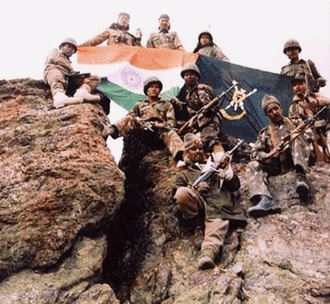
Tiger Hill — Point 5062 — was the most visible objective of the Kargil War, a fang of rock and snow that could be seen from the Drass township itself. Its recapture became, by July 1999, as much a matter of national morale as of military necessity.
Fire and manoeuvre
The plan that succeeded rested on two ideas. The first was overwhelming fire: more than a hundred guns, mortars and rocket launchers were massed to pound the summit, the single largest artillery concentration of the war. The second was surprise — a climbing party of 18 Grenadiers would scale the sheer, and therefore lightly held, eastern spur while the enemy’s attention was fixed on the obvious approaches.
The eastern spur
It was on that spur that Grenadier Yogendra Singh Yadav, severely wounded, fought through enemy bunkers to secure a foothold for the troops following behind — an action later recognised with the Param Vir Chakra.
Aftermath
With 8 Sikh and 2 Naga in support, 18 Grenadiers completed the capture of Tiger Hill on 4 July 1999. The fall of so prominent a feature, broadcast across the country, marked the moment the outcome of the war was no longer in doubt.